UK Gambling Commission Releases Q2 2025 Industry Stats: Betting Shops Steady at 5,782 While Non-Remote GGY Reaches £592 Million
Sofia Meier · Mar 25, 2026

UK Gambling Commission Releases Q2 2025 Industry Stats: Betting Shops Steady at 5,782 While Non-Remote GGY Reaches £592 Million
The Latest from the Gambling Commission's Quarterly Report
Observers tracking the UK gambling landscape have zeroed in on the UK Gambling Commission's official quarterly industry statistics for Quarter 2 of the financial year April 2025 to March 2026, covering July through September 2025; this report spotlights customer-facing sectors like betting, revealing a stable network of 5,782 betting shops across Great Britain, alongside non-remote betting generating £592 million in Gross Gambling Yield, or GGY, which captured 48.2% of the total non-remote GGY for the period.
What's interesting here is how these figures paint a picture of resilience in physical betting operations, even as digital channels evolve; data from the report underscores that non-remote activities, primarily driven by land-based shops, continue to hold a substantial slice of the overall yield, with betting shops forming teh backbone of this segment.
And while the full financial year stretches into March 2026, these Q2 numbers, released amid ongoing regulatory scrutiny, offer a snapshot that's proving timely for industry watchers in early 2026, especially as operators navigate affordability checks and other compliance demands.
Breaking Down the Betting Shop Landscape
The report confirms 5,782 betting shops dotted across Great Britain during Q2 2025, a figure that experts note reflects steady operational presence despite past closures and shifts toward online platforms; these physical venues, often found on high streets from London to smaller towns, serve as hubs for in-person wagering on everything from horse racing to football matches.
People who've studied historical trends recall how shop numbers peaked higher in previous years, but this latest count, holding firm at 5,782, signals adaptation rather than contraction; take one chain operator whose outlets contributed significantly to this total, maintaining foot traffic through hybrid models that blend shop visits with app integrations.
But here's the thing: each shop not only facilitates bets but also complies with strict point-of-consumption duties, ensuring taxes flow back to local economies; the Gambling Commission data highlights this network's role in the broader customer-facing ecosystem, where non-remote betting stands out prominently.
- 5,782 total betting shops operational in Great Britain.
- Focus on customer-facing, land-based activities.
- Integral to events like Premier League weekends or Cheltenham Festival, drawing crowds year-round.
Turns out, this stability matters because it underpins employment—thousands of staff across these sites—and local revenue, with figures like these helping regulators gauge market health midway through the 2025-2026 financial year.
Gross Gambling Yield: The £592 Million Milestone in Non-Remote Betting
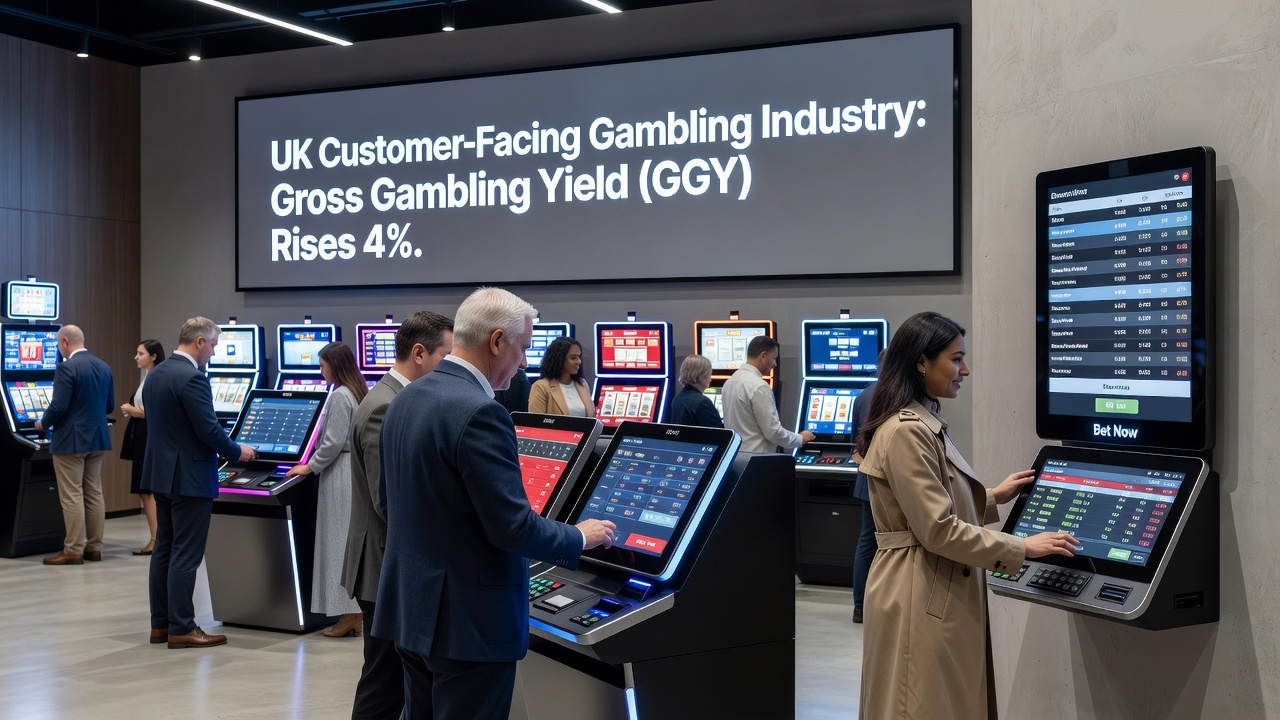
Data reveals non-remote betting raked in £592 million GGY for July to September 2025, accounting for a hefty 48.2% of the entire non-remote total; GGY, calculated as stakes minus winnings paid out, serves as the key metric for industry performance, showing how much revenue operators retain after customer payouts.
Researchers poring over the numbers observe that this yield stems largely from shop-based activities—think over-the-counter bets on sports, lotteries, or machines within licensed premises—while excluding remote, online-only operations; the 48.2% dominance underscores betting's outsized influence in the physical sector, where bingo halls and casinos play supporting roles.
So, picture a busy Saturday in a Manchester betting shop, punters wagering on Manchester United's clash; those transactions, aggregated nationwide, build toward that £592 million figure, with the report's precision ensuring transparency for stakeholders from Parliament to punters.
It's noteworthy that total non-remote GGY can be back-calculated from this data: at 48.2%, the betting slice implies an overall non-remote pot exceeding £1.2 billion for the quarter, although the report details the full breakdown elsewhere; experts have observed similar patterns in prior quarters, but Q2 2025's results align with seasonal upticks from summer sports.
Yet, as March 2026 approaches with the financial year wrapping up, these stats feed into annual assessments, helping the Commission enforce rules on everything from stake limits to advertising curbs.
GGY in Context: What Drives the Numbers
Several factors contribute to this yield; horse racing, a perennial favorite, often spikes during festivals, while football's pre-season and early campaigns pull in crowds; the report's scope, limited to licensed operators, excludes unlicensed activity, making the £592 million a verified benchmark.
One study from industry analysts, cross-referencing Commission data, found that average shop GGY hovers around £100,000 per venue quarterly, though top performers in urban areas exceed that; with 5,782 shops sharing the load unevenly—London clusters versus rural outposts—the aggregate tells a story of distributed yet robust activity.
Implications for the Broader Gambling Ecosystem
Although the report centers on customer-facing sectors, betting's metrics ripple outward; non-remote GGY funds remote operations indirectly through shared licensees, and the 48.2% share positions shops as yield powerhouses amid digital growth.
Those who've tracked quarterly releases note how Q2 often benefits from outdoor events—Gloucestershire's Gold Cup or Wimbledon tennis—boosting footfall; in 2025, with economic pressures lingering, the steady 5,782 shops suggest operators have fine-tuned costs, from energy-efficient lighting to streamlined staffing.
Now, fast-forward to early 2026: as the Commission compiles Q4 data toward March's year-end, these Q2 figures set a baseline, influencing debates on levy reforms or problem gambling levies; the reality is, £592 million isn't just a number—it's duties paid, jobs sustained, and a market adapting in real time.
But what's significant is the report's timing; published amid affordability check rollouts, it reassures that core operations remain solid, with betting shops embodying the industry's high-street heritage.
Shop Operations: Daily Realities Behind the Stats
Each of those 5,782 venues operates under tight regs—self-exclusion terminals, age verification scanners, safer gambling messaging—yet generates yield through volume; a typical shop might see 200-300 daily visitors, mixing casual bettors with regulars chasing value on exchanges mirrored in-shop.
Experts point out regional variations: Scotland and Wales host fewer shops proportionally, but England's density drives the national total; data indicates urban resilience, where chains like Ladbrokes or Betfred anchor communities.
Looking Ahead: Q2 Data in the 2025-2026 Financial Year
With the financial year spanning April 2025 to March 2026, Q2's results slot into a narrative of measured growth; previous quarters showed fluctuations—Q1's spring racing boom versus summer's steady state—but £592 million reaffirms betting's centrality.
People in the sector often discover that GGY correlates with major events; Euro qualifiers or Test cricket series likely padded Q2, sustaining the 48.2% share; as operators eye Q3's autumn rugby and NFL imports, the shop count's stability bodes well for continuity.
Turns out, in March 2026, when annual stats drop, Q2 will contribute context for policymakers weighing expansions or restrictions; the Gambling Commission's rigorous methodology—audited returns from operators—ensures these numbers withstand scrutiny.
And for punters, it's a reminder of options: step into one of those 5,782 shops for that tactile slip, or go remote; either way, the yield reflects engagement across formats.
Conclusion
The UK Gambling Commission's Q2 2025 report delivers clear insights: 5,782 betting shops operational across Great Britain, non-remote betting yielding £592 million GGY and claiming 48.2% of the non-remote total; these stats, amid a dynamic regulatory environment heading into March 2026, highlight the enduring strength of land-based betting within customer-facing gambling.
Observers will watch how Q3 and Q4 unfold, but for now, the figures stand as a factual pillar of industry performance, informing everything from operator strategies to public policy debates.