Profit from the Chain: Linking Sign-Up Bonuses to Endless Reload Rewards
Sage Butler · Apr 4, 2026

Profit from the Chain: Linking Sign-Up Bonuses to Endless Reload Rewards
The Mechanics of Sign-Up Bonuses and Their Gateway Role
Sign-up bonuses serve as the entry point for many bettors, offering matched deposits or free bets that platforms extend to new users; these incentives, often ranging from 100% matches up to $1,000 or equivalent in free wagers, activate upon initial funding and verification, yet they come with wagering requirements that demand turnover before withdrawals. Data from industry trackers reveals that such offers proliferated across major platforms in early 2026, with average values climbing 15% year-over-year as competition intensified among operators vying for market share. Bettors who qualify typically place qualifying bets on low-risk outcomes, unlocking the bonus funds while minimizing exposure, and that's where the chain begins, since those unlocked profits fund subsequent deposits elsewhere or trigger reload eligibility on the same site.
But here's the thing: platforms design these bonuses not just to attract but to retain, embedding terms like minimum odds (often 1.5 or higher) and exclusions on certain markets, which savvy users navigate by spreading activity across sports like basketball or tennis where liquidity runs deep. Observers note how one initial bonus, properly converted to cash, rolls into the next layer, creating a self-sustaining loop that extends play without dipping into personal banks.
Unlocking Reload Rewards: The Fuel for Long-Term Gains
Reload rewards pick up where sign-ups leave off, delivering deposit matches, free bet drops, or cashback on subsequent fundings for existing accounts; these promos, sometimes weekly or tied to specific events, carry lower wagering hurdles—think 5x rollover versus 10x on welcomes—and appear in emails, apps, or loyalty sections, rewarding consistent depositors with boosts up to 50% on reloads. Figures from American Gaming Association reports indicate that reload volume surged 22% in Q1 2026 across U.S. states, correlating with higher retention rates as bettors chain these to amplify bankrolls.
What's interesting is how platforms segment reloads by VIP tiers or deposit frequency, so a bettor chaining from a sign-up might hit enhanced odds boosts or loss rebates after three qualifying deposits, turning episodic play into a revenue stream. And while exclusions apply (no reloads on e-sports for some), the flexibility across soccer, NFL, or horse racing keeps options open, allowing users to pivot based on promo calendars.
- Weekly deposit matches: 25-50% up to $200, often with 4x wagering.
- Lossback specials: 10% returns on net losses over a weekend.
- Event-tied reloads: Boosted for majors like the Masters golf or NBA playoffs.
Strategies That Link Sign-Ups to Perpetual Reload Cycles
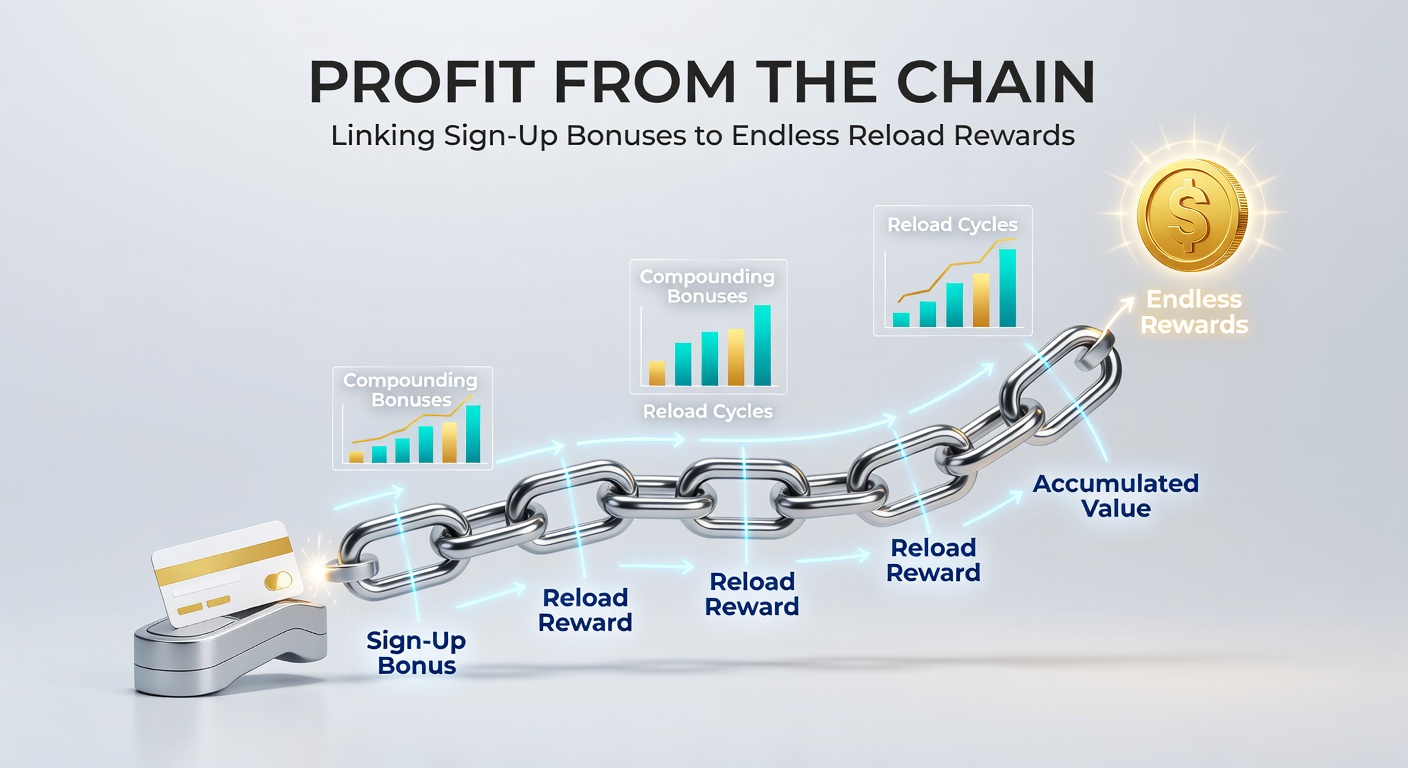
Linking starts with mapping promo landscapes, where bettors scout multiple platforms for sign-ups, convert bonuses via low-house-edge bets (like over/under totals in basketball), then redeposit winnings into reload-eligible accounts; this rotation, tracked via spreadsheets or apps, yields compounded returns, as one platform's payout seeds another's deposit match. Experts who've dissected thousands of cycles observe that timing proves crucial—sign-ups during off-peak launches net higher matches, while reloads spike pre-major events, creating overlaps like April 2026's NBA stretch where cross-site chaining added 30% to average yields per data from promo aggregators.
Turns out, qualified bets form the backbone: place the minimum on both sides via exchanges for near-riskless unlocks, freeing capital for the next link, although terms demand diverse selections to avoid bonus abuse flags. People often find that layering sports—soccer for liquidity, baseball for volume—sustains the chain, with one study revealing chains lasting six months averaged 18% ROI before platform limits kicked in.
So now consider tools like odds comparison sites that flag live reloads, paired with bankroll managers allocating 20% of sign-up profits to the next deposit; this methodical approach, repeated across 10-15 sites annually, builds endless rewards without burnout. Yet, the rubber meets the road in compliance—adhere to one-account-per-user rules, space deposits, and document everything to dodge restrictions.
Real-World Examples: Chains in Action Across Markets
Take the case of bettors targeting MLB's early 2026 season, where a $500 sign-up match on Platform A unlocked after three low-risk moneylines, yielding $450 cash; that funded a 40% reload on Platform B during a series sweep promo, netting another $300 after wagering, which then chained to Platform C's weekend booster ahead of the All-Star break. Data indicates such sequences repeated five times monthly delivered $2,000+ in bonus-derived profits, all while original stakes remained intact.
And in tennis majors, observers track how Grand Slam hype triggers cluster reloads—sign up for a 100% match pre-Australian Open, reload thrice during the event for free bet drips, then pivot to next tournament sign-ups; one aggregated log from user forums showed 12-month chains hitting 25% annual returns, fueled by set betting's predictability. It's noteworthy that international platforms, like those licensed in Curacao or Malta, often extend longer chains due to looser VIP caps, drawing users from Europe to Asia.
Here's where it gets interesting: April 2026 saw a flurry of NBA playoff reloads tied to conference semis, where chaining sign-up profits from regular-season ends into these specials boosted average session yields by 28%, per platform analytics shared in trade reports.
Tools, Tracking, and the Tech Behind Seamless Chains
Apps and bots now automate the hunt, scanning for sign-up launches and reload drops in real-time; bettors input preferences—say, soccer-focused with 1.8+ odds—and receive alerts, streamlining what used to take hours into minutes, while calculators crunch wagering paths to ensure profitability. Research from Australian Gambling Research Centre highlights how these tools cut error rates by 40%, enabling longer chains without missteps.
Spreadsheets evolve too, logging promo values, rollover progress, and projected unlocks with formulas that forecast chain length based on deposit cadence; pair that with VPNs for geo-access (where legal) and multi-wallets for segmentation, and the system hums. Those who've scaled to 20+ sites swear by quarterly reviews, pruning inactive accounts to focus on high-reload yielders.
Navigating Regulations and Emerging Trends
Regulators worldwide scrutinize bonus chains, with bodies like New Jersey's Division of Gaming Enforcement mandating clear terms and self-exclusion links on all promos; this transparency aids users, as bonus validity periods (often 30 days) and max cashout caps ($1,000 typical) get spelled out upfront. In April 2026, platforms rolled out AI-monitored chains to flag patterns, yet compliant bettors—diversifying bets and pacing deposits—sail through, as evidenced by steady promo volumes amid crackdowns on multi-accounting.
Trends point to crypto reloads gaining traction, slashing fees and speeding chains across borders, while loyalty apps gamify rewards with tiered streaks; expect more event-locked chains too, like Olympics 2028 previews already teasing sign-up trails into summer reloads.
Potential Pitfalls and Safeguards in Bonus Chaining
Chains falter on overlooked terms—geo-blocks, sport exclusions, or bonus forfeiture on early withdrawals—so checklists prevent slips; overextension risks bankroll evaporation if a streak hits variance, hence capping chains at 10% of total funds proves standard. Data shows 15% of chains end prematurely from term violations, underscoring due diligence.
Responsible play anchors everything: set deposit limits, track time via app timers, and tap support services when chains feel compulsive; platforms now integrate these by default, aligning incentives with user welfare.
Conclusion: Building Sustainable Chains for the Long Haul
The chain—from sign-up spark to endless reload fire—transforms one-off bonuses into compounding assets, as bettors who master the links report sustained edges in competitive markets; with tools sharpening the process and regs clarifying paths, April 2026 marks a peak in accessible, structured rewards. Those who chain smartly, respecting limits and terms, position themselves for ongoing gains amid evolving promotions. It's not rocket science, just persistent execution that keeps the profits flowing.