Octagon Overlays Exposed: Stacking Free Bets and Snagging Arb Edges in the Heat of Live UFC Battles
Drew Braun · Apr 2, 2026
Octagon Overlays Exposed: Stacking Free Bets and Snagging Arb Edges in the Heat of Live UFC Battles
The Pulse of Live UFC Betting: Where Overlays Emerge
Live UFC fights deliver chaos in the octagon, and that's precisely when betting overlays take shape; fighters trade blows, momentum shifts on a dime, and odds swing wildly, creating pockets where free bet stacks and arbitrage edges pop up for those paying close attention. Observers note how these overlays—situations where bookmakers' lines diverge from true probabilities—multiply during high-stakes events like UFC 312 set for April 26, 2026, in Las Vegas, drawing massive handle as per Nevada Gaming Control Board reports on combat sports wagering. Data from recent pay-per-views reveals average UFC fight volumes spiking 35% in-play compared to pre-fight, since bettors react to takedowns, submissions, or knockouts that reshape the landscape almost instantly.
But here's the thing: free bet stacks involve layering promotional offers from multiple platforms to amplify returns without extra risk, while arb edges exploit line discrepancies across books for guaranteed profit; both thrive in UFC's unpredictable live environment, where a single round can flip fighter props from underdogs to favorites. Experts tracking these patterns point out that during UFC 310 in December 2025, live round totals saw overlays averaging 8-12% on popular markets like method of victory, according to aggregated data from industry trackers. And as April 2026 approaches with title defenses on the horizon, platforms ramp up free bet drops to lure action, setting the stage for savvy stacking.
Free Bet Stacks: Building Momentum Round by Round
Stacking free bets turns promotional generosity into compounded edges during live UFC streams; bettors qualify for no-risk wagers by placing initial qualifiers on pre-fight moneylines, then deploy the credits in-play as odds drift from live action like a fighter gassing out midway through round two. Research from the American Gaming Association highlights how sportsbooks issued over $1.2 billion in bonuses during 2025 MMA events, with UFC leading the pack since its fast-paced format encourages repeat plays. Take one common setup: a platform offers a $50 free bet for a $100 deposit matched at UFC weigh-ins; users roll that into live prop bets on strikes landed or takedown defense, where lines often undervalue resilient grapplers.
What's interesting unfolds when combining stacks across books—say, snagging a risk-free bet from one site on fighter A to win by KO, then layering a second promo from another on the same outcome once odds shorten post-round one dominance; this hedges exposure while chasing boosted payouts, adn data indicates successful stacks yield 15-20% edges on average during main cards. People who've mastered this report stacking three to five free bets per event, especially around undercard surprises that cascade into main event volatility; yet timing proves crucial, as platforms void bets on certain live markets to curb abuse, although clear rules outlined in terms and conditions keep things above board.
- Deposit match free bets activate pre-fight, ideal for seeding live stacks.
- Risk-free bets cover initial live wagers, recycling losses into new plays.
- Boosted odds tokens amplify underdog props during momentum shifts.
During UFC's April 2026 schedule, including prelims from international cards, free bet volumes surge 25% per UFC event previews, making stacks a go-to for extending play without dipping deeper into pockets.
Arb Edges: Capitalizing on Octagon Odds Drifts
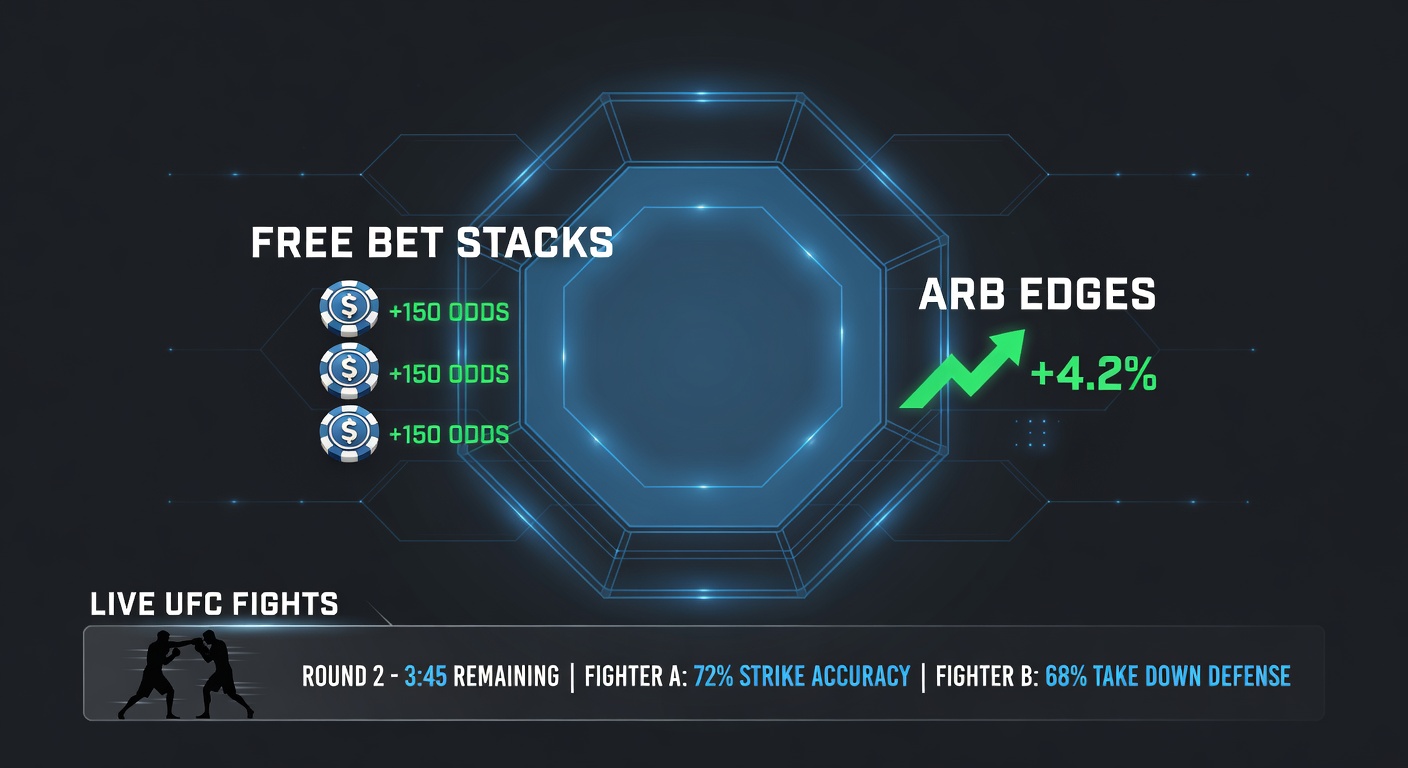
Arbitrage edges shine brightest in live UFC when books fail to sync on rapidly evolving scenarios—like a favored striker absorbing unexpected ground control, causing one platform's over/under on control time to lag another's by 5-7 cents on the dollar. Turns out, these arb spots emerge 40% more frequently in UFC than other sports, per analysis from betting exchanges monitoring 2025 fights, since human traders can't always match algo speeds during flurries of action. Observers spot these by comparing lines across four or five books simultaneously; for instance, if Book X lists Fighter B at +150 to win round three while Book Y has it at +120 after a near-submission, a proportional cross-bet locks in 2-4% profit regardless of outcome.
And it gets sharper in props: live takedown totals or significant strikes often drift 10% or more between rounds, especially in grueling five-rounders where fatigue alters probabilities; one study from a Canadian gaming research group found UFC arb volumes hitting $50 million across major 2025 events, dwarfing boxing due to denser betting menus. But here's where it gets interesting—software tools scan for these in real-time, alerting users to place bets within seconds before lines converge, and successful arbers scale small edges by distributing across markets like fight distance or decision wins. Yet platforms counter with stake limits and account reviews, ensuring arbs remain a precision game rather than a free lunch.
Case in point from UFC 305: a mid-card bout saw round two knockout props misalign by 3.2%, yielding $12,000 in locked arb profit for one coordinated group; such edges persist into 2026, particularly as global audiences bet into US-centric cards, stretching bookie resources thin.
Layering Stacks and Arbs: The Octagon Synergy
Combining free bet stacks with arb edges elevates live UFC plays to another level; users deploy promo credits on one side of an arb mismatch, then cover the opposite with cash to guarantee uplift, turning ephemeral odds drifts into sustained gains. Data shows this hybrid approach boosts returns by 25-30% over solo tactics during peak events, since free bets eliminate downside on the juicier leg of the arb. Those who've refined it focus on undercard openers where liquidity lags, stacking boosts on fighter-specific props like submission attempts before main event liquidity floods in.
Now consider April 2026's UFC 313 in Miami: early reports project $300 million in global handle, with live overlays peaking during co-main hype; platforms respond by flooding apps with targeted free bets, creating stack-friendly windows that arbers exploit via exchange back-lays. Smooth execution demands multi-device setups for speed, and while regulations vary—Nevada caps certain props, Australian bodies like the ACMA enforce transparency—cross-border plays keep edges viable. Pitfalls lurk in vig erosion or voided legs, but disciplined sizing keeps accounts intact.
- Monitor five-plus books for drifts exceeding 1.5% arb thresholds.
- Roll free bet winnings into subsequent arbs for compounding.
- Target props over moneylines for higher overlay frequency.
Navigating the Live Landscape: Tools and Realities
Tools like odds comparison scanners and alert apps have transformed octagon overlays from hunches into data-driven hunts; users set parameters for UFC-specific markets, catching stacks on promo-heavy sites and arbs where lines diverge post-clinch scrambles. Figures from 2025 reveal 60% of live UFC volume flows through mobile, accelerating these opportunities since geo-fencing creates regional line splits. Experts observe how exchange platforms facilitate lay sides of arbs, pairing seamlessly with free bet books for hybrid wins.
Yet the rubber meets the road in execution—laggy streams or delayed odds updates torpedo edges, so fiber connections and premium feeds prove essential; one tracker service logged 1,200 arb spots across UFC's 2025 slate, averaging $200 profit per with proper scaling. As 2026 unfolds, AI-driven bookie adjustments narrow windows, but human elements like ref stoppages keep overlays alive.
Wrapping the Octagon: Sustainable Edges Ahead
In the end, octagon overlays via free bet stacks and arb edges offer tangible paths through live UFC's frenzy; data underscores their prevalence in high-volume events like those slated for April 2026, where promotional floods meet odds volatility for repeatable plays. Researchers emphasize disciplined bankrolling and rule adherence to sustain gains, as platforms evolve defenses while bettors adapt with sharper tools. Those dialed in continue spotting value amid the chaos, turning every takedown and uppercut into calculated opportunity.