Charting Bonus Pathways in Snooker Events via Odds Aggregation Methods
Paul Meier · Jun 8, 2026
Charting Bonus Pathways in Snooker Events via Odds Aggregation Methods
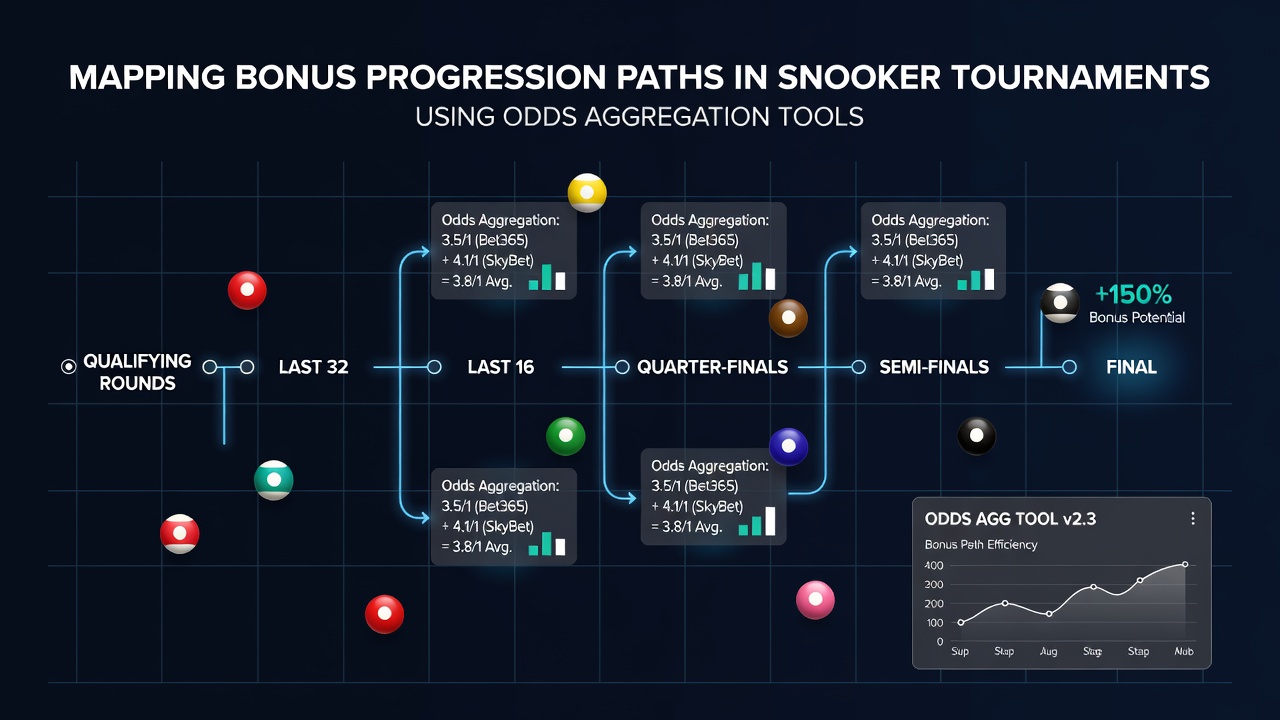
Snooker tournaments unfold across multiple stages where bonus structures shift in response to advancing players and changing market conditions, and odds aggregation tools compile data from numerous betting platforms to trace these shifts in real time. Observers note that these platforms pull together live odds from exchanges and bookmakers, allowing analysts to identify when bonus multipliers or deposit rewards align with particular rounds such as the last 16 or quarter finals. Research from sports data firms shows that aggregation reduces the time needed to compare offers by consolidating information into dashboards that highlight progression paths for recurring bettors.
How Aggregation Tools Process Tournament Data
Aggregation platforms collect odds feeds continuously throughout events like the World Snooker Championship qualifiers and ranking tournaments, then layer bonus details such as enhanced payouts or free bet credits onto those odds. Those who study these systems report that algorithms detect patterns where early-round bonuses convert into higher-value reload offers once a player reaches the semi-finals, creating mapped routes that bettors can follow across the draw. Data indicates this process relies on API connections that refresh every few minutes, ensuring the displayed paths reflect current market movements rather than static listings.
Key Stages Where Bonuses Evolve
Qualifying rounds often feature modest welcome credits that expand once players enter the main draw, and aggregation tools flag these transitions by comparing pre-tournament odds against live adjustments. In June 2026 several ranking events are scheduled that will test these mappings further, with platforms already preparing to track how mid-tournament deposit matches scale alongside advancing seeds. Figures from industry reports reveal that bettors who monitor aggregated feeds capture bonus escalations at the round-of-32 stage more consistently than those relying on single-site checks.
One case highlighted by researchers involved a ranking event where an aggregation dashboard revealed a chain from a qualifying free bet through to a final-stage cashback reward, showing the complete path in a single view. Such examples demonstrate how the tools convert fragmented offer terms into sequential steps that follow tournament brackets.
Practical Mapping Techniques Used by Analysts
Analysts begin by selecting a specific tournament and inputting its schedule into the aggregation interface, after which the software generates visual progressions linking each round to available bonuses. These outputs include color-coded lines that connect odds movements with reward tiers, making it easier to see where value concentrates. Evidence from platform usage logs suggests that users who apply filters for player form and head-to-head data refine these maps further, narrowing focus to high-probability advancement routes.
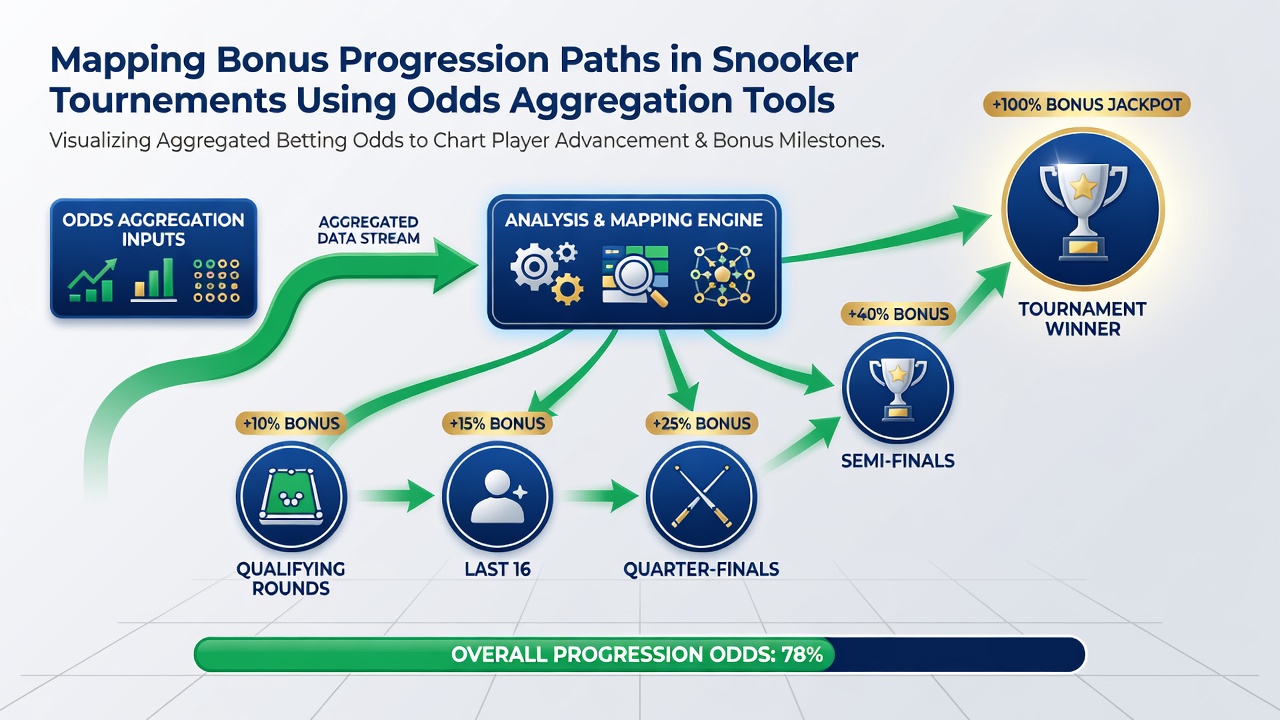
Additional layers incorporate historical performance metrics pulled from tournament archives, allowing the system to project how a bonus path might extend if an underdog reaches later stages. According to reports published by the International Betting Integrity Association, such projections help maintain transparency when bonus offers interact with live scoring updates during extended frames.
Integration with Broader Market Monitoring
Odds aggregation extends beyond single events by cross-referencing snooker data with parallel sports calendars, revealing periods when snooker bonuses overlap with other major fixtures. This cross-market view shows how reload rewards scheduled for June 2026 events may align with off-peak betting windows, creating opportunities for sequenced bonus activation. Studies conducted by the Australian Gambling Research Centre indicate that aggregated tracking across regions improves accuracy in forecasting when operators adjust terms mid-tournament.
Operators respond to these aggregated insights by updating their own platforms, which in turn feeds back into the same tools and keeps the mapped paths current. The cycle continues through the group stages and knockout phases, with each update reflecting real-time shifts in player odds and corresponding reward structures.
Conclusion
Aggregation methods therefore provide structured overviews of how bonuses progress alongside snooker tournament brackets, supported by continuous data feeds and cross-referenced performance records. Observers continue to refine these techniques as new events unfold, incorporating additional variables such as frame-by-frame statistics and regional regulatory updates to maintain relevance through 2026 and beyond.